
Making Connections and Building Community
The relational way to network: making connections and building community
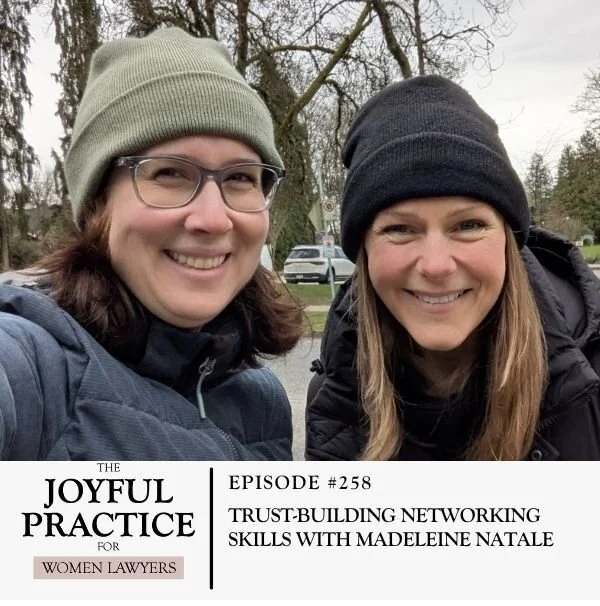
Recently, Paula Price (lawyer turned certified executive coach) and I recorded a podcast on an activity most people dread: networking. We had so much to cover that we even paused mid-conversation to do a short role play, bringing some of the techniques to life and showing what it can actually look like to meet someone and navigate those early moments of connection.
During our discussion, we explored several key ideas: challenging the notion that networking is transactional and instead grounding it in connection and community; naming why it matters, not just professionally, but as a way of being human together, especially in a world increasingly shaped by AI; and reinforcing that networking is a long game, not something you start only when you need immediate results.
We also unpacked one of the most important mindset shifts: moving from “what can I get?” to “what can I offer?” with the reminder that your attention, presence, and genuine curiosity are often the most valuable things you can give. Alongside this, we shared (and role-played) practical ways to show up more effectively in conversations, from deep listening to asking thoughtful questions and staying focused on the other person.
We didn’t get to cover everything we had hoped, so here is a complementary blog to build on what we started in the podcast.
Motivation and networking events
First, it’s important to acknowledge that, for many of us, it can be really hard to enter into a networking event and get yourself into networking mode; especially as an introvert. So, set yourself a reasonable goal for the event, and allow yourself to leave once you’ve attained it. It can be really bite-sized, such as, “I want to hand my business card out to one potential future client.” Odds are, it’s like exercising, once you get going, you’ll probably end up staying for a bit. But, if after that one interaction you really feel like leaving, then leave. There is no point suffering through an event. If you’re not listening or if your mind is elsewhere, your time is probably better spent elsewhere. Honour where you’re at and your rhythms, while acknowledging the work that you’ve put in.
Not enjoying, or not finding much value in, networking events isn’t a reason to disengage or get discouraged. They’re just one way to connect. So, how do you prefer to connect with people? You can also use events as a starting point to move into a more natural, attuned interaction. For example, if someone you hoped to speak with was there and you didn’t get the chance, or the conversation was brief, follow up shortly after (within 24 hours, ideally) and continue the conversation in a more intentional way.
And if the idea of cold connections is just too much to consider right now, ask yourself, who do you already know that you’d genuinely like to reconnect with? Who comes to mind when you think of the question, “I wonder what they’re up to now?” This absolutely “counts” as networking as well.
Leveling up a networking experience: reflection and the power of a self debrief
Building a reflective practice, along with tracking your connections, is a way to deepen the experience and move even more towards the relational as opposed to the transactional. This need not be a formal practice, but it should be intentional. Some low-friction ways to reflect (besides the obvious one: write it down) are: reflect on the experience while commuting home from the event. Send yourself, or a friend, a voice memo with your takeaways. Create a LinkedIn post about the experience and share who you learned about and how it impacted you.
Here are some reflective prompts to help jump start your thinking:
Which conversation felt most energizing, and why?
What did I learn about someone that I couldn’t have learned from their LinkedIn profile?
Who did I feel naturally drawn to? What does that suggest about my interests or direction?
Who seemed drawn to me? What might they have been picking up on?
What’s one small next step that moves this connection beyond a one-time interaction?
So what, now what?
You’ve listened to the podcast. You’ve read this blog. And now? What are you going to take from this and implement? Going from insight to action is hard. Set yourself a goal or intention for building your community.
What’s just one thing you can commit to today to building your network? And, when are you going to do it? Specifically? Not next week… when next week? What day? What time? Put it in your calendar.
Making connections and building community can be tedious, especially when it’s reactive. Doing your future self a favour by continuing to constantly tend to your networking garden can be a real pleasure, with the right tools and mindset.
